
Finding My Voice
How my literary agent asked me to find my voice, and how I decided to start this blog

For Brazilians: read here. (leia aqui em português)
Hello to those who have made it this far.
My name is Thais Bolton. I am an illustrator and a writer. I am Brazilian, and I live in Florida with my husband, Skylar.
I never thought I would have a blog. My presence on social media has always been quite limited, mostly focused on my illustration work.
I started this blog for a few reasons. The main one is in the title of my first post: Finding My Voice.
It’s an interesting title — at least to me.
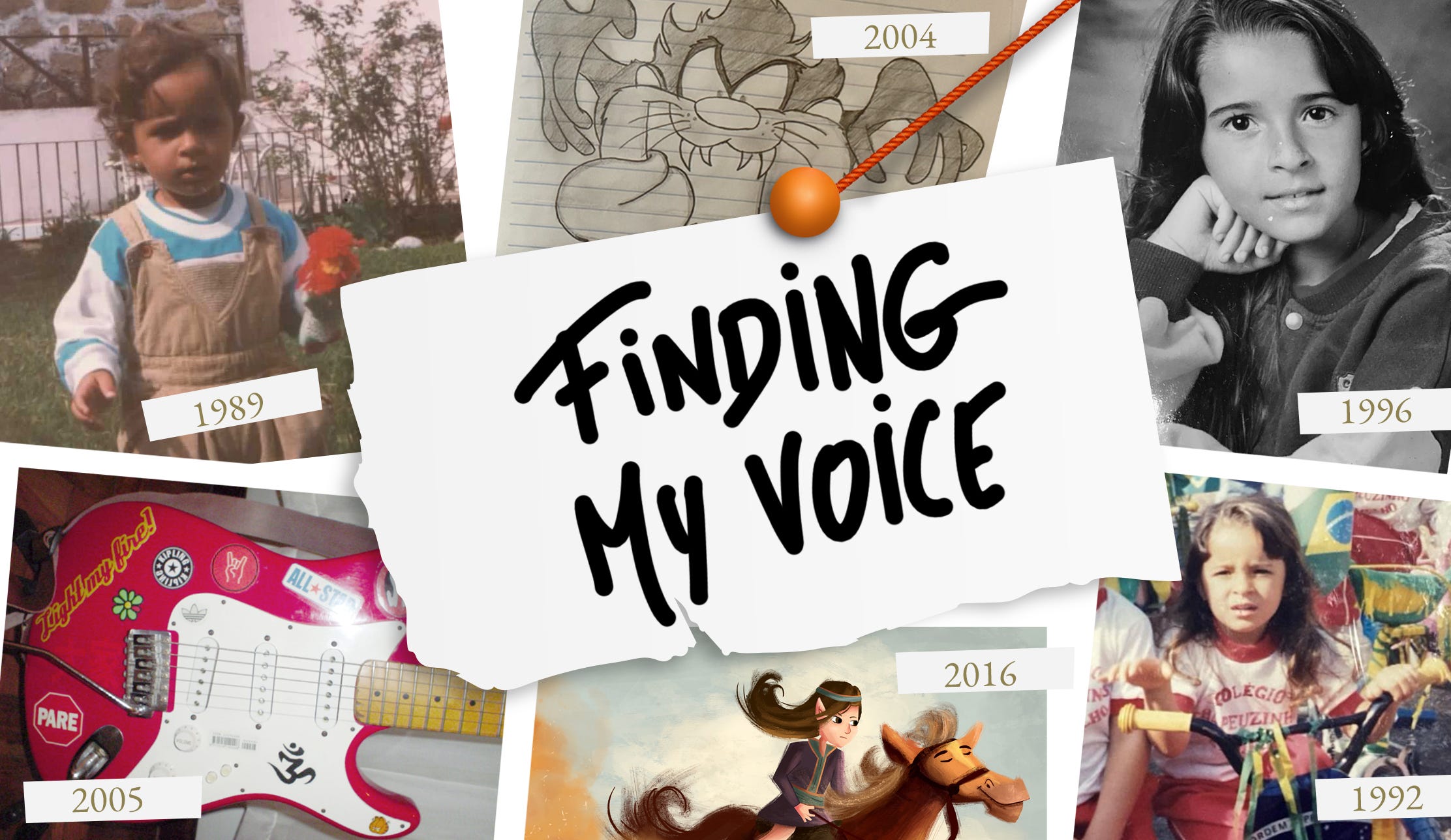
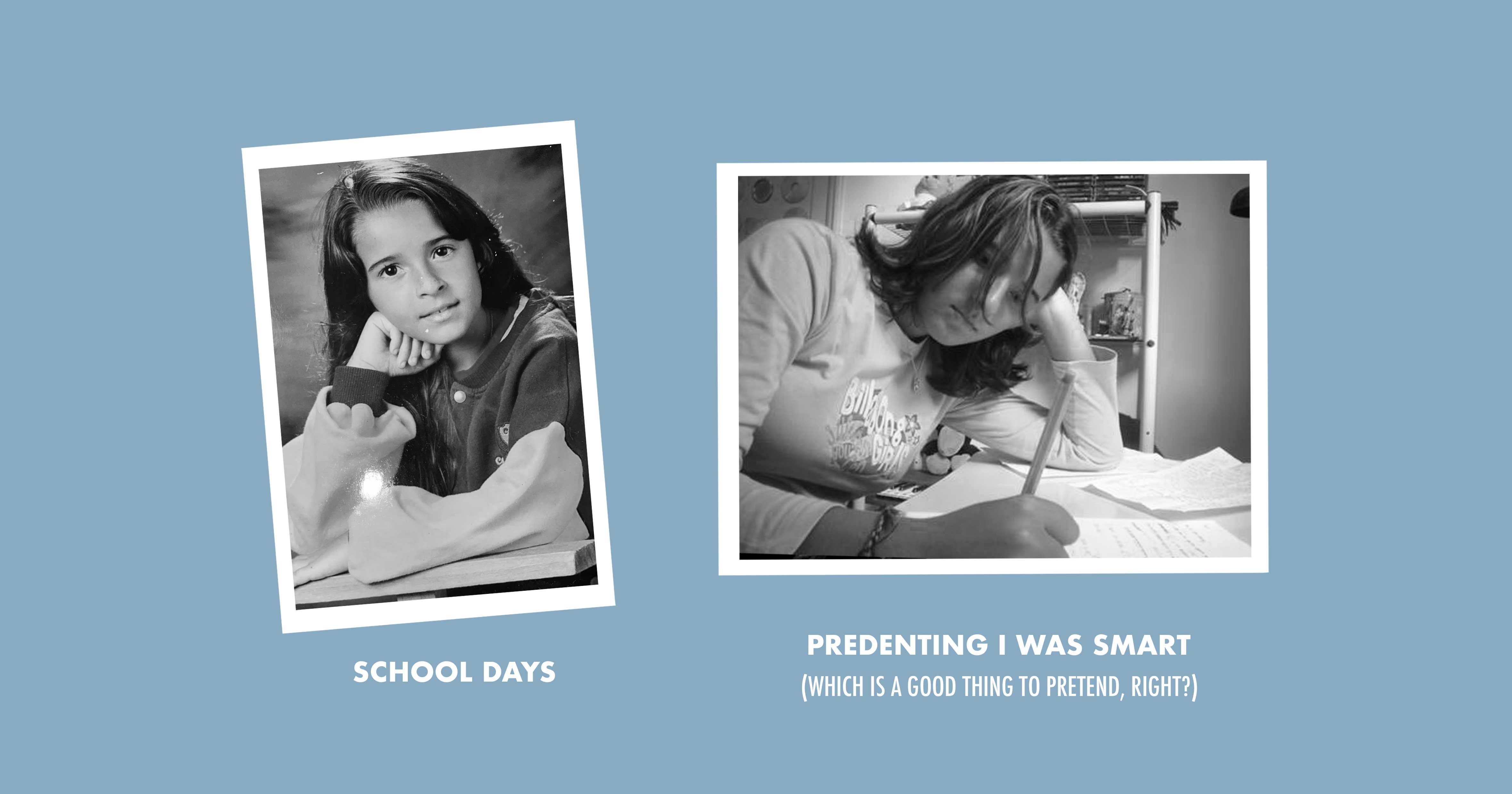
Between the ages of six and eleven, I had no friends at school. It wasn’t for lack of desire, but because I didn’t know how to speak. When a kinder child — or perhaps one more obedient to the principal — was encouraged to try to befriend me, they would come up to me during recess. The child would leave frustrated at not being able to hear my timid, low voice, and I would be even more frustrated for not being able to communicate.
There were years of suffering. Going to school was synonymous with torture. Every day, as I passed through the gate of that feared place, I felt as though I was entering the labyrinth of the Minotaur — completely lost, with a beast always about to attack me. I lost count of how many medical exams I underwent because of intense daily headaches. No diagnosis was ever found.
At home, I was a “normal” child. I spoke what one would expect of a child my age.
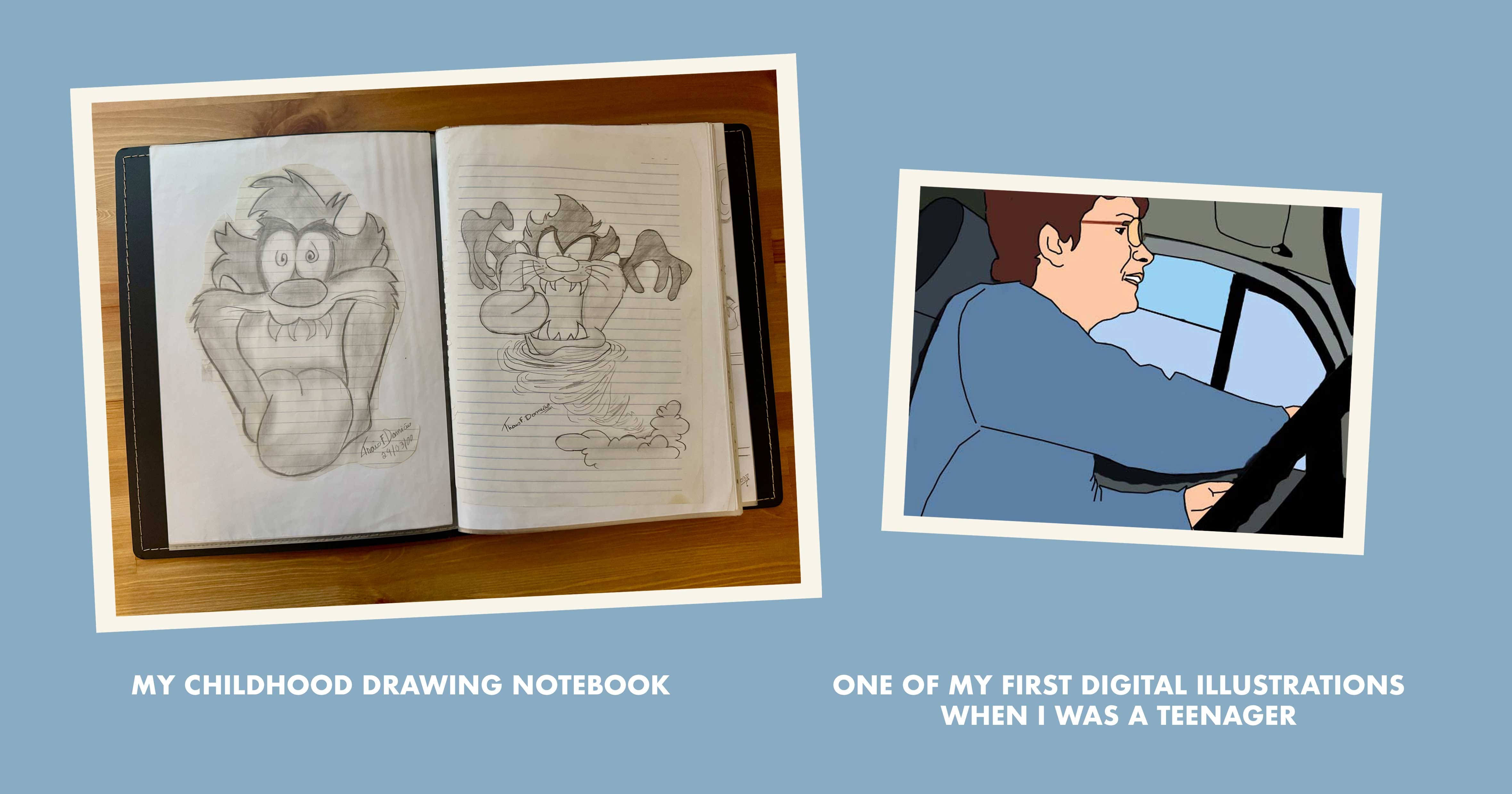
Drawing was always my greatest hobby. Perhaps the isolation I lived in at school was fertile soil for creativity.
My notebooks were always filled with drawings. Even so, I said I wanted to be a pediatrician. I repeated it with conviction: “When I grow up, I’m going to be a doctor.” My aunt always said I would be an illustrator. I thought that was nonsense. Drawing was just a hobby.
My school life was as disastrous as my ability to make friends. At some point, I had to give up the idea of becoming a doctor, which, looking back now, seems like a very sensible decision for someone who almost faints every time she sees blood.
As a teenager, I thought the line “I’m the worst at what I do best,” from Nirvana’s song Smells Like Teen Spirit, defined me perfectly. You can tell my self-esteem wasn’t very high.
My mother had serious concerns about what I would become in life. I wasn’t that worried. I kept drawing and playing the guitar.
By a stroke of luck, I ended up studying graphic design in college. I worked at good agencies. I loved the glamour of living in São Paulo, the largest city in Brazil, and having a “cool” job. I loved working overtime. I felt on top of the world when I found, at the grocery store, packaging I had created. That worked as a form of personal validation.
I liked that design life so much that I ended up forgetting how to draw. Drawing stopped being my hobby. In fact, I think I no longer had any hobbies. I was too busy for that.
Now I can’t help but remember our dear aviator — the one who, one day, was captivated by a Little Prince. The one who, as a boy, drew a boa constrictor that had swallowed an elephant and was discouraged by adults, was advised to set drawings aside and dedicate himself to geography, history, or mathematics. That was the end of a promising career as a painter.
The adult who discouraged me was myself.
And so my drawings fell asleep in time, stored in an old folder from childhood and adolescence. Time passed, and I met a great illustrator: Tiago Hoisel. By my good fortune, he became not only a great inspiration but also a great friend, a brother, and my wedding godfather.
I met Tiago through my sister of the heart, Rachel, who married him. When I saw Tiago’s work, something changed. I felt deeply inspired and suddenly remembered that old hobby I loved so much.
I began drawing again, with no intention whatsoever of one day becoming a professional illustrator. After all, for that, I would have to be at least as good as my inspiration. And how could I be as good as Tiago?
In a sense, I was honoring my own childhood words: it was just a hobby. Meanwhile, I continued working on packaging.
But something inside me had changed. I no longer found joy in seeing my packaging at the store. I found even less joy in going to the agency and working overtime. My life seemed settled, but suddenly an emptiness filled me.
Had I found a problem?
Or a solution?
Once again, by a stroke of fate, I went to the United States and managed to get an interview at one of the best design agencies in San Francisco. The agency’s generous art director, Paul Bennett, received me to review my portfolio.
It’s very likely that he doesn’t remember me. But his existence is essential to my story.
It was 2018. My portfolio was filled with packaging and graphic design projects. At the end, I included my recent drawings — those inspired by Tiago’s work — timidly. Deep down, I think I was still hoping my aunt had been right all along. That someone would see my drawings. That someone would like them. That maybe I could be an illustrator.
Paul examined my portfolio carefully. Then he asked me if I would like to hear some advice.
How kind. How could I not want to hear it?
His advice felt like those invitations from childhood — from the children who wanted to be my friends at school. It was everything I wanted, but I couldn’t do it. It was an invitation for me to speak, to express myself. To find my voice.
He praised my work as a designer, but said that my greatest strength was in that last section of the portfolio. Yes. My drawings.
“You need to work with this.”
Those were his words.
And at that moment, the phrase “I’m the worst at what I do best” echoed inside me once again. There is a popular saying that comparison is the thief of joy. That thief had probably been haunting me since my school days. But it was in the attempt to work with drawing that it became most present.
All the joy I had in drawing as a child — or drawing casually — began to fade the moment I decided to become a professional illustrator.
This difficult path began in 2015, when I returned from the United States and told Tiago that Paul had said I should work with illustration. Tiago replied that it might be possible, but that I would have to study a lot — and he emphasized the word a lot.
And that is what I did. Perhaps not in the most correct way. I ignored some advice and skipped important steps in the drawing-learning process — steps I don’t need to go into detail about here, but that I certainly do not recommend to anyone who is just beginning to learn how to draw.
During that period, something interesting was happening inside me. Two extremes operated at the same time, preventing any balance. On one side, that old Kurt Cobain phrase was present, and I thought I was the worst artist imaginable. On the other, I believed I was already ready, that there was not much more to learn about drawing. All that was missing was for someone from Walt Disney Studios to discover me, and surely I would be hired.
It was with that mindset that I moved to the United States in 2018 to pursue a master’s degree in Visual Development.
I loved the glamour of living in San Francisco, California, and studying art. I crossed the city on my scooter, believing I was living the best moment of my life. To me, success was waiting around the corner. But inside, deep down, in that hidden place, the thief of joy continued to consume me.
My mother can count how many times she received a call from her daughter crying, often from the university bathroom, wanting to quit because she “didn’t know how to draw.” On the first day of an oil painting class, the professor asked me to leave the room. He said that just by watching me try to draw a circle, he already knew I didn’t know how to draw, let alone paint in oils. The only perfect grade I received during the master’s program was in learning how much I still had to learn.
I survived the master’s program. I didn’t get the internship I wanted so badly, and I lost count of how many “no’s” I received from animation studios.
But I also received some “yeses.” Since then, I have been working with drawing. Later on, I even managed to fulfill that dream of working for Disney. But at that point, I was already beginning to realize something important: I didn’t need any validation to exist. And that job I had dreamed of for so long turned out to be just a job. With all the respect and admiration I have for the life and legacy of Mr. Walt Disney, drawing Elsa or Mickey Mouse did not fill the emptiness I felt inside.
My brother said I should look for a psychologist when I told him I was going to quit. I hope he knows that it was an internal life-or-death decision — an essential part of my search to find my voice.
In 2024, after much sweat, I finally received a “yes” that I had been looking for for a long time. My dear literary agents, Ethan and Heather Long, believed in my work. Since then, Ethan has been guiding me and refining me so that I can become the best version of myself. Recently, during a call, he told me something that is the reason I am writing here.
He said that I have good elements to get where I want to go with my work, but that something essential was still missing: my voice.
These were his words to me:
“Experiment. Explore. Break your own patterns. Play until you uncover something that feels riskier, edgier — maybe even a little dangerous.”
I read these words every day.
I take the homework he gives me very seriously. To break patterns, it is first necessary to recognize them. Patterns not only in drawing itself, but also those that live internally — in that hidden place that still seeks, in a sneaky way, old validations and continues to be haunted by the thief of joy.
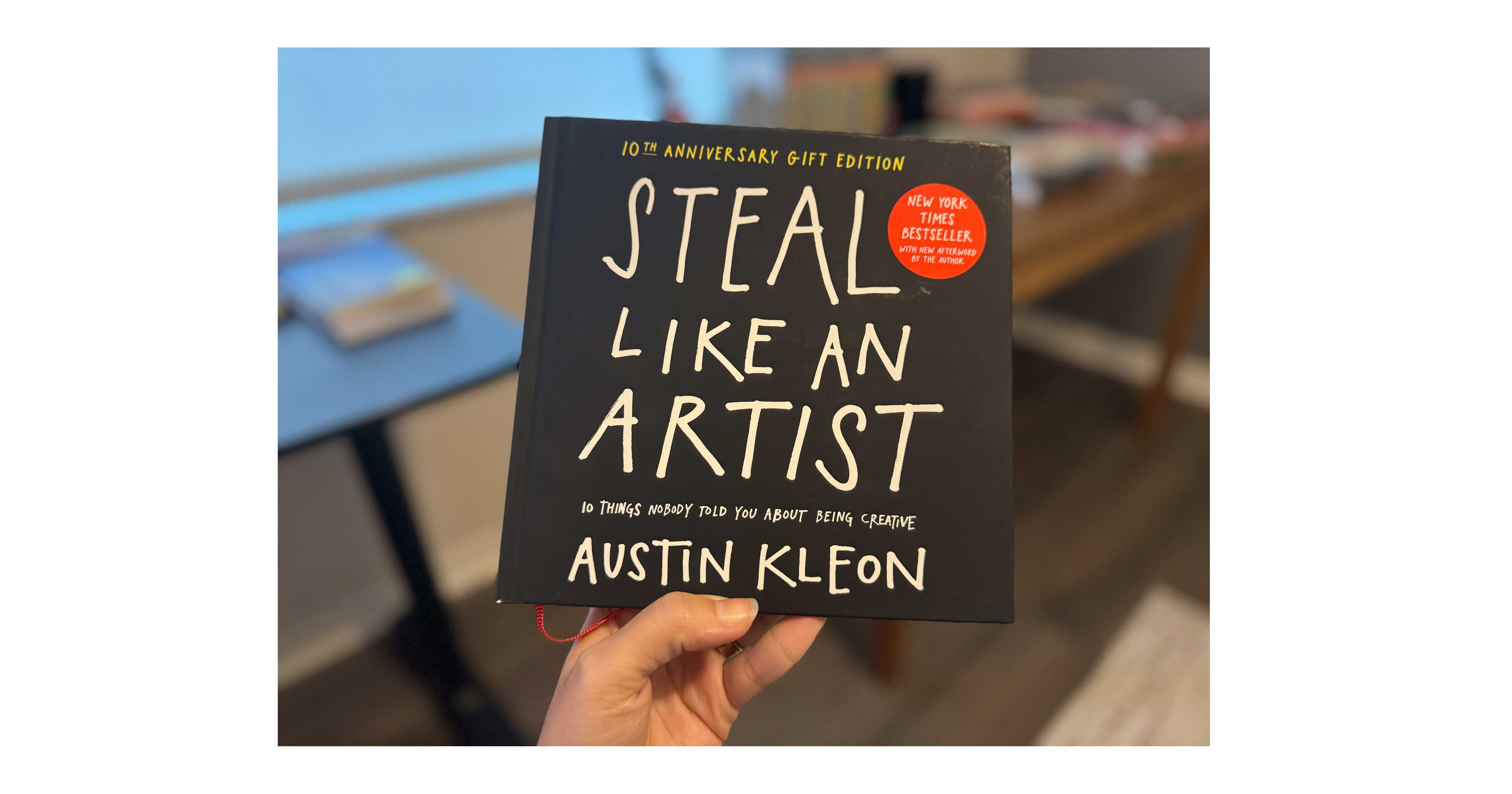
In the middle of this search for my voice, my friend João Arleo recommended the book Steal Like an Artist by Austin Kleon. This is another reason I am writing here. Among so many good ideas the book offers, there is a list of things to do. One of the items on the list that I wasn’t yet doing was having a blog. I found the advice valid — and decided to follow it.
Here I am, seeking to rediscover the voice I once lost back in childhood.
There is hope, because deep in the heart, where the most hidden things live, there also dwells the mystery of renewal. May God allow me to rediscover joy, with a free and unburdened heart. And may my words always be crowned with the garland of grace.
To be continued…
(How literature saved my life)
Until the next post.
Acknowledgements: To all the people mentioned in this text; to David Hartmann, Disney art director, who gave me the opportunity to work there; and to all my incredible former coworkers at Disney, with whom I had the honor of working.
Thais, enjoyed reading this blog because it is beautifully written and it has helped me to know you on a deeper level. I am looking forward to reading more.